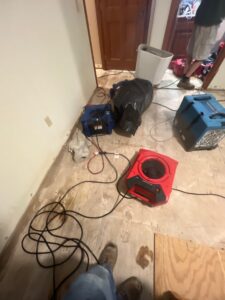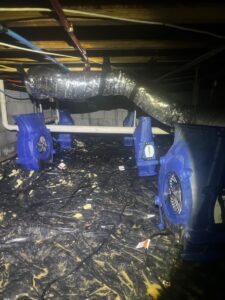
When water reaches your baseboards and trim, you need to act within the first 30 to 60 minutes to prevent serious damage. Remove standing water immediately, pull back any carpet or rugs touching the affected walls, and start air circulation with fans. The baseboards themselves are often the least of your worries. What matters most is the hidden moisture that has likely penetrated behind those baseboards into your wall cavities, subfloor, and insulation.
I have seen homeowners focus entirely on drying visible surfaces while moisture silently destroys drywall and framing behind the trim. That hidden saturation is where real problems develop, including structural damage and mold growth that can show up weeks later.
Why Baseboard and Trim Water Contact Is More Serious Than It Looks
Baseboards and trim serve as the lowest point where your walls meet your floor. When water reaches this level, it has already spread across a significant portion of your flooring. More critically, baseboards act like wicks. They absorb moisture and transfer it directly into wall cavities.
Most baseboards are made from MDF, softwood, or composite materials. All of these absorb water readily. Once saturated, they swell, warp, and begin to deteriorate. But the baseboard damage you can see is just the surface issue.
Behind those baseboards, you typically have:
- Drywall that extends below the visible trim line
- Wall insulation that holds moisture like a sponge
- Wooden framing and bottom plates that can rot
- Subfloor materials that may be absorbing water from beneath
Homeowners throughout Nashville and Clarksville deal with this scenario regularly, especially during heavy spring rains or after plumbing failures. The humid Tennessee climate makes proper drying even more challenging because ambient moisture levels are already elevated.
Immediate Steps to Take in the First Hour
Speed matters more than perfection in the first hour. Your goal is to stop the spread, remove bulk water, and start evaporation as quickly as possible.
Stop the Water Source
Before anything else, identify and stop whatever caused the water intrusion. If a pipe burst, shut off your main water supply. If water is entering from outside, try to redirect it away from the foundation. If your washing machine overflowed, unplug it and turn off the supply valves.
Remove Standing Water
Use towels, mops, or a wet vacuum to remove as much water as possible from the floor. Push water away from walls rather than toward them. If you have a shop vacuum, it works well for extracting water from carpet edges near baseboards.
Pull Back Floor Coverings
If carpet touches your wet baseboards, pull it back at least two feet from the wall. Lift the carpet and pad to expose the subfloor beneath. Carpet pad holds enormous amounts of water and will continue transferring moisture to your walls if left in place.
Start Air Movement
Position box fans or any available fans to blow air across the wet areas. Open windows if humidity outside is lower than inside. The goal is to keep air moving constantly across wet surfaces to accelerate evaporation.
Should You Remove the Baseboards Yourself?
This decision depends on how much water contacted the baseboards and for how long. In many cases, removing the baseboards is the only way to properly dry the wall cavity behind them.
Consider removing baseboards yourself if:
- Water sat against them for more than 30 minutes
- The baseboards feel soft, swollen, or warped
- You notice moisture or discoloration on the wall above the trim line
- The baseboards are MDF rather than solid wood
To remove baseboards safely, use a thin pry bar and work slowly. Insert the bar between the baseboard and wall, prying gently to avoid damaging the drywall. Most baseboards come off in full lengths if you work patiently.
Once removed, you can see the true extent of water damage. Many homeowners are surprised to find the drywall behind baseboards is saturated several inches higher than the visible water line. This wicking action happens quickly in porous materials.
Checking for Hidden Moisture Behind Walls
Visible wetness tells only part of the story. Professional restoration technicians use moisture meters to measure saturation levels inside walls, but you can perform some basic checks yourself.
Touch the wall surface above where water reached. If it feels cool or damp several inches above the trim line, moisture has wicked upward inside the wall cavity. Press firmly on the drywall near the floor. Saturated drywall feels soft and may flex under pressure.
Look for these warning signs:
- Paint bubbling or peeling near the floor
- Drywall that sounds hollow or feels spongy
- Visible water stains creeping up the wall
- A musty smell near the affected area
- Baseboards pulling away from the wall
If you notice any of these signs, moisture has penetrated beyond what simple air drying can address. Wall cavities trap humid air, and without proper equipment, that moisture can linger for weeks. This creates ideal conditions for mold growth, which can develop within 24 to 48 hours in warm, humid environments.
What Equipment Actually Dries Walls and Subfloors
Consumer fans and dehumidifiers help with surface moisture, but they have limitations when water has penetrated wall cavities and subfloor materials.
Air Movers
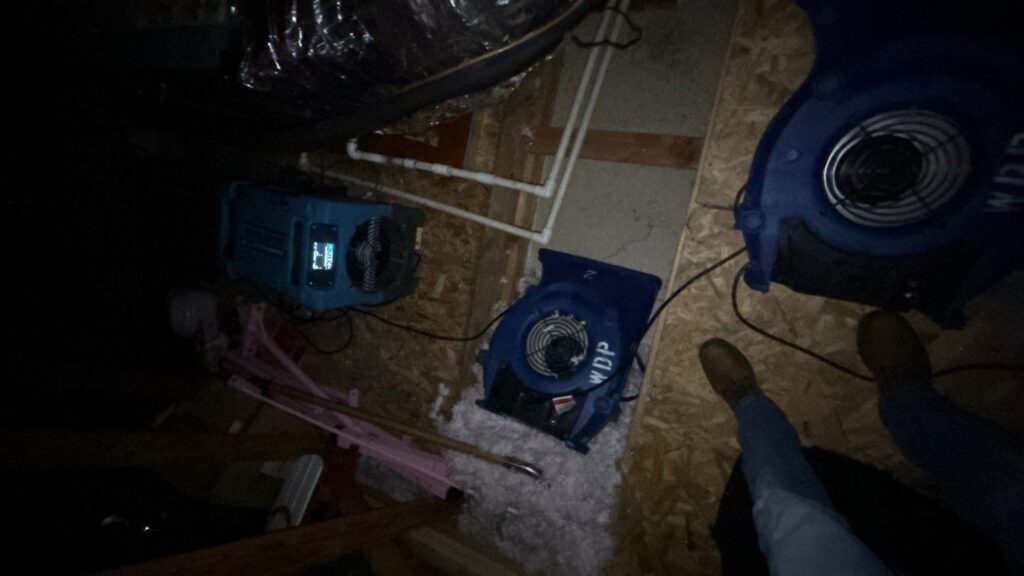
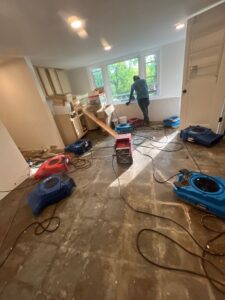
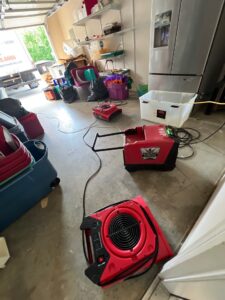
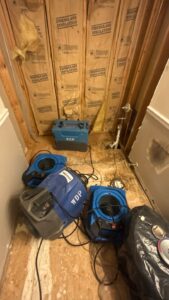
Professional air movers produce much higher airflow than household fans. They are positioned to force air into wall cavities through the gap left by removed baseboards. This creates evaporation inside the wall, not just on the surface.
Commercial Dehumidifiers
Restoration dehumidifiers can remove dozens of gallons of water from the air daily. They work continuously to pull moisture out of the air as it evaporates from wet materials. Household dehumidifiers work, but much more slowly.
Injectidry Systems
For water trapped in wall cavities, technicians sometimes use specialized equipment that pumps dry air directly into wall spaces through small holes or gaps. This technique can dry walls without requiring extensive demolition.
The drying process typically takes three to five days with professional equipment. Without it, wall cavities can remain damp for weeks, especially in humid conditions.
When Drywall and Subfloor Need Replacement
Not every water incident requires cutting out drywall or replacing subfloors. The deciding factors are the type of water, how long it sat, and whether materials have begun to deteriorate.
Drywall usually needs replacement if:
- It was submerged or saturated for more than 24 hours
- The paper backing has begun to separate
- It feels crumbly or has lost structural integrity
- Mold growth has begun on the surface or back side
- Contaminated water, such as sewage or flood water, was involved
Subfloor replacement depends on the material. Plywood subfloors can often be dried and saved if addressed quickly. Particle board and OSB subfloors absorb water more readily and may swell permanently, requiring replacement.
A restoration professional can help assess whether materials can be saved or need removal. This evaluation prevents both over-demolition, which wastes money, and under-demolition, which leaves hidden moisture in place.
Preventing Mold Growth After Water Reaches Trim
Mold becomes a concern whenever moisture remains trapped for more than 24 to 48 hours. The key to prevention is rapid and thorough drying, not antimicrobial sprays or treatments alone.
Steps to reduce mold risk:
- Remove wet materials that cannot be dried quickly
- Keep air circulating until all materials test dry
- Monitor humidity levels and keep them below 50 percent
- Inspect hidden spaces like wall cavities and under flooring
- Watch for musty odors in the weeks following the incident
If you notice a musty smell developing days or weeks after water damage, that typically indicates moisture remains trapped somewhere. At that point, calling a professional for moisture mapping can identify exactly where the problem is hiding.
What Your Insurance May Cover
Homeowner insurance policies typically cover sudden and accidental water damage, such as a burst pipe or appliance failure. They generally do not cover gradual leaks, flooding from outside sources, or damage caused by homeowner negligence.
When filing a claim for water damage involving baseboards and trim:
- Document everything with photos and video before cleanup begins
- Save damaged materials if possible for adjuster inspection
- Report the claim promptly, most policies require timely reporting
- Keep receipts for any emergency mitigation expenses
Insurance companies expect homeowners to take reasonable steps to prevent further damage. This includes water extraction, removing wet materials, and starting the drying process. Failing to mitigate can result in claim denial for secondary damage that could have been prevented.
Each policy has different language regarding coverage limits and deductibles. Review your specific policy or speak with your agent to understand what your coverage includes.
Frequently Asked Questions
How long can baseboards be wet before they need replacement?
MDF baseboards often begin deteriorating within hours of saturation and usually need replacement. Solid wood baseboards can sometimes be salvaged if dried within 24 to 48 hours, though they may warp and require refinishing.
Can I just dry the baseboards without removing them?
You can attempt surface drying, but this rarely addresses moisture trapped behind the baseboards in wall cavities. Removing baseboards allows you to confirm whether the wall cavity is wet and dry it properly if needed.
How do I know if water damaged my subfloor?
Check for soft spots, swelling, or buckling in the floor near where water reached the baseboards. You may notice the floor feels bouncy or sounds different when walked on. Visible cupping or warping in hardwood floors also indicates subfloor moisture.
Will my drywall need to be cut out?
Not always. If drying begins quickly and the drywall maintains its structural integrity, it can often be saved. However, drywall that was submerged, contaminated, or saturated for extended periods typically requires removal.
How soon can mold start growing after water damage?
Mold spores can begin colonizing damp materials within 24 to 48 hours under warm, humid conditions. Visible mold growth may appear within days if moisture is not removed promptly.
Should I turn up the heat to dry things faster?
Moderate warmth can speed evaporation, but excessive heat can cause materials to dry too quickly and crack or warp. More important than temperature is air circulation and dehumidification.
When to Call a Water Damage Professional
Many minor water incidents can be handled by homeowners who act quickly and have the right equipment. However, some situations require professional assessment and equipment.
Consider calling a restoration company if:
- Water sat for more than a few hours before discovery
- Multiple rooms or large areas are affected
- Water involved sewage, grey water, or outdoor flooding
- You suspect moisture is trapped in wall cavities or under flooring
- You notice mold growth or persistent musty odors
- You plan to file an insurance claim and want proper documentation
Professional restoration technicians have moisture detection equipment that can map exactly where water has traveled, including inside walls and under flooring. They can also provide documentation that insurance companies accept for claim purposes.
If water has reached your baseboards and trim, do not wait to see what happens. The longer moisture sits in hidden spaces, the more extensive and expensive the damage becomes. Take action now, dry what you can access, and call for a professional assessment if there is any doubt about hidden moisture. Getting an expert evaluation early often saves thousands of dollars compared to discovering hidden damage months later.