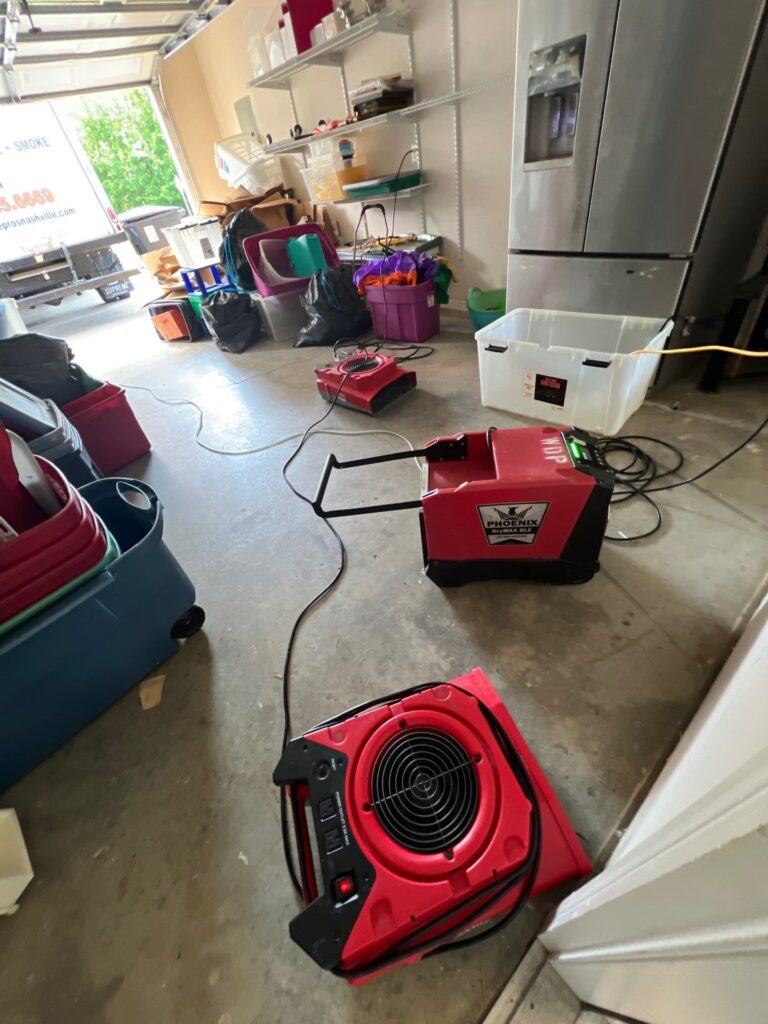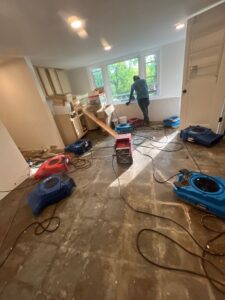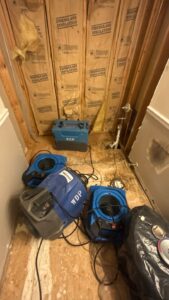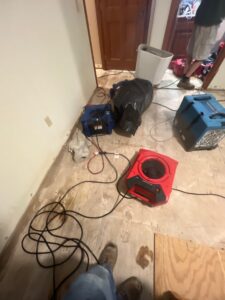
When water floods your Clarksville home, every minute counts. Emergency water extraction starts with shutting off the water source if possible, removing standing water using pumps and vacuums, then immediately beginning the drying process to prevent structural damage and mold growth. Water Damage Pros TN provides 24/7 response in Clarksville, and once on site our crew begins removing hundreds of gallons per hour using truck-mounted equipment far more powerful than anything available at hardware stores.
The difference between calling for help now versus waiting until morning can mean the difference between replacing drywall in one room versus gutting your entire first floor. Water moves fast, wicking up walls, soaking into subfloors, and finding every gap and crack in your home’s structure. Here’s exactly what happens during emergency extraction and what you should do while waiting for help to arrive.
What Happens in the First Hour After Water Damage
Water doesn’t wait for convenient timing. Whether it’s 2 AM or during a holiday weekend, the damage clock starts ticking the moment water hits your floor. In the first 60 minutes, water begins saturating carpet padding, seeping into baseboards, and traveling along the path of least resistance, often into adjacent rooms or down into crawl spaces.
Drywall acts like a sponge. It can wick moisture upward at a rate of about one inch per hour in severe flooding situations. That means if you have six inches of standing water and wait eight hours to address it, you could be looking at water damage extending several feet up your walls.
The priorities during this first hour include:
- Stopping the water source if it’s something controllable like a burst pipe or overflowing appliance
- Turning off electricity to affected areas if safe to do so
- Moving valuable items and furniture out of standing water
- Documenting everything with photos and video for insurance purposes
- Calling a professional extraction team immediately
Many Clarksville homeowners underestimate how quickly water spreads through a structure. A washing machine supply line failure can release 500 gallons per hour. Even a small leak under a sink, if undetected overnight, can saturate an entire floor system.
Professional Extraction Equipment vs. DIY Methods
The shop vacuum in your garage removes about 5 to 10 gallons per hour under ideal conditions. Professional truck-mounted extraction units remove 50 to 100 gallons per minute. That’s not a typo. The equipment difference between consumer-grade and commercial restoration tools is measured in orders of magnitude.
Truck-mounted extractors connect to powerful vacuum systems that can pull water from deep within carpet padding and even draw moisture from subfloor materials. Portable extraction units used for hard-to-reach areas still outperform rental equipment by significant margins.
Beyond raw extraction power, professional equipment includes:
- Weighted extraction tools that compress carpet to release trapped water
- Subsurface extraction units designed specifically for hardwood and laminate floors
- Specialty attachments for upholstery, stairs, and tight spaces
- Moisture detection equipment to identify hidden water pockets
Trying to handle significant water intrusion with rental equipment isn’t just slower. It often leaves enough moisture behind to cause secondary damage that becomes apparent weeks later when you notice musty odors or see discoloration spreading across your ceiling.
The Extraction Process Step by Step
When a professional crew arrives at your Clarksville property, they follow a systematic approach developed over thousands of water damage calls. Understanding this process helps you know what to expect and recognize when corners might be getting cut.
Initial Assessment and Safety Check
Before any equipment comes off the truck, technicians assess the situation. They check for electrical hazards, identify the water source and category, and determine whether the structure is safe to enter. Category 1 water from a clean source like a supply line requires different protocols than Category 3 water involving sewage or flood waters.
This assessment phase typically takes 15 to 30 minutes and results in a scope of work document that outlines exactly what needs to happen.
Water Removal Phase
The actual extraction begins with removing the bulk of standing water. Technicians work systematically from the area furthest from the exit point, pushing water toward extraction points. For significant flooding, submersible pumps might run first to lower water levels before extraction wands can work effectively.
This phase continues until extraction equipment is no longer pulling liquid water from materials. In severe cases, carpet and padding might need removal to access saturated subfloors directly.
Moisture Mapping and Detection
Once visible water is gone, the real detective work begins. Technicians use moisture meters, thermal imaging cameras, and hygrometers to create a complete picture of where moisture exists within the structure. This moisture map guides equipment placement and helps track drying progress over the coming days.
Hidden moisture pockets are common behind cabinets, inside wall cavities, and underneath flooring materials. Missing these areas during extraction sets the stage for mold growth and ongoing structural issues.
What You Should Do Before the Crew Arrives
The time between your emergency call and when technicians arrive isn’t wasted time. Taking the right actions during this window can significantly reduce your overall damage and make the restoration process smoother.
If you can safely reach your main water shutoff valve, turn it off. In Clarksville homes, this valve is typically located near the water heater, in the garage, or near where the main line enters the house. If the flooding came from a specific fixture, there may be a local shutoff valve under the sink or behind the toilet.
Clear a path for the extraction team. They’ll be bringing in heavy equipment and running hoses, so moving furniture and belongings out of the way helps them work faster. If items are too heavy or waterlogged to move, at least clear walkways.
Take photos and videos of everything before cleanup begins. Walk through affected areas documenting water levels, damaged items, and the overall scope. This documentation becomes critical when filing insurance claims and can prevent disputes about the extent of original damage.
Additional steps that help the process:
- Place aluminum foil or plastic under furniture legs to prevent staining
- Remove area rugs if they’re still salvageable
- Open interior doors to improve airflow
- Turn up the air conditioning if it’s summer to help with dehumidification
- Keep pets and children away from affected areas
Why Timing Matters More Than You Think
Insurance adjusters and restoration professionals use specific timeframes when evaluating water damage. The industry standard breaks damage progression into phases, and costs escalate significantly at each transition.
Within the first 24 hours, water damage typically remains in Category 1, meaning materials can often be dried in place rather than replaced. Drywall, carpet, and most flooring can be saved with proper extraction and drying. Secondary damage like mold growth hasn’t begun yet.
Between 24 and 48 hours, conditions change. Drywall begins losing structural integrity. Carpet padding that seemed salvageable now holds enough bacteria to require disposal. The musty smell that develops indicates microbial activity starting. Materials that could have been dried now need replacement.
After 72 hours, you’re looking at a fundamentally different situation. Mold spores, which exist everywhere naturally, now have the moisture and time needed to establish colonies. What started as water damage restoration now becomes a mold remediation project with different protocols, equipment requirements, and costs.
Homeowners in Springfield and Goodlettsville have learned this lesson the hard way. Waiting over a weekend to address Friday night water damage often doubles or triples the final restoration bill.
Understanding Water Categories and Why They Matter
Not all water damage is created equal. The source of the water determines extraction protocols, personal protective equipment requirements, and what materials can be salvaged.
Category 1 water comes from clean sources. Supply line breaks, rainwater intrusion, and overflowing sinks without sewage involvement fall into this category. These situations have the best salvage potential when addressed quickly.
Category 2 water contains some contamination. Dishwasher or washing machine discharge, aquarium water, and toilet overflow with urine but no feces classify as Category 2. More aggressive extraction and antimicrobial treatment become necessary.
Category 3 water poses serious health risks. Sewage backups, floodwater from outside, and any water that has contacted soil or decomposing organic material require specialized handling. Porous materials contacted by Category 3 water almost always require disposal rather than restoration.
The important point: water can change categories over time. Clean water sitting in your home for 48 hours absorbs bacteria, building materials, and organic compounds, effectively upgrading to Category 2. This is another reason why response time matters so much.
Common Mistakes That Make Water Damage Worse
In the stress of an emergency situation, homeowners sometimes take actions that seem helpful but actually complicate the restoration process or increase damage.
Using a regular household vacuum to remove water ranks high on this list. Standard vacuums aren’t designed for water and can short-circuit, shock the operator, or become permanently damaged. Only wet-dry vacuums rated for liquid extraction should contact standing water.
Turning on the furnace to “dry things out” can backfire significantly. Forced air systems can spread moisture and contaminants throughout the house, affecting areas that weren’t originally damaged. The HVAC system can also draw moisture into ductwork, creating a hidden mold reservoir.
Other common mistakes include:
- Placing newspaper or cardboard to walk on, which transfers ink and dyes onto wet carpet
- Using colored towels that can stain flooring and carpet
- Removing baseboards yourself and causing unnecessary damage to walls
- Throwing away damaged items before documenting them for insurance
- Assuming water hasn’t spread to adjacent rooms or lower floors
Perhaps the biggest mistake is waiting to see if things dry on their own. They won’t. At least not safely or completely. The moisture trapped in wall cavities, subfloors, and insulation won’t evaporate through normal conditions. It needs professional drying equipment and monitoring.
What to Expect After Extraction Is Complete
Removing standing water is just the first phase of water damage restoration. The drying process that follows typically takes three to five days, sometimes longer depending on the materials involved and the extent of saturation.
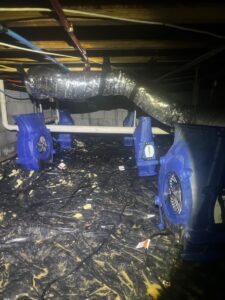
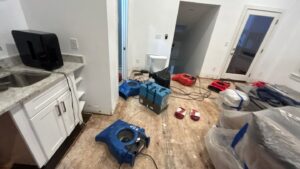
After extraction, technicians place commercial air movers and dehumidifiers throughout affected areas. Air movers direct high-velocity airflow across wet surfaces, accelerating evaporation. Dehumidifiers capture that moisture from the air, preventing it from simply relocating to dry materials nearby.
Equipment placement follows specific patterns to maximize airflow across all wet surfaces. You might see air movers pointed at walls in ways that seem odd, but there’s science behind the positioning. Drying large commercial properties in Nashville requires even more complex equipment configurations.
Daily monitoring visits track moisture levels in affected materials. Technicians take readings at the same locations each day, documenting the drying curve. Equipment gets repositioned as certain areas reach target moisture levels while others need more attention.
The goal is reaching equilibrium moisture content, the point where materials contain no more moisture than surrounding unaffected materials. Only then can reconstruction begin safely.
Frequently Asked Questions
How quickly can an extraction team reach my Clarksville home?
Water Damage Pros TN provides 24/7 response in Clarksville, and we respond quickly across the area. Call (629) 250-3594 any time, day or night.
Will my insurance cover emergency water extraction?
Most homeowner policies cover sudden and accidental water damage, which includes burst pipes, appliance failures, and storm-related intrusion. Gradual damage from deferred maintenance or flooding from external sources may have different coverage. Check your policy language or call your agent before assuming coverage.
Can I stay in my home during the extraction and drying process?
In many cases, yes. If the water source was clean and only affected a portion of your home, living in unaffected areas during restoration is usually possible. Sewage backups or extensive contamination may require temporary relocation until the situation is safe.
How do I know if my carpet can be saved?
Carpet salvageability depends on water category, saturation time, and carpet age and condition. Clean water extracted within 24 hours often allows carpet to be dried in place. Padding almost always needs replacement regardless of water source. Carpet contacted by sewage typically requires disposal.
What if I notice water damage but can’t identify the source?
Call a professional immediately. Extraction teams have leak detection equipment including thermal cameras and moisture meters that can trace water back to its origin. Leaving an unknown leak to continue while you search for it only extends the damage timeline.
Should I turn off my water heater during a flooding emergency?
If the water heater is in or near the flooded area, yes. Gas water heaters can have their pilot lights extinguished by rising water, creating a gas leak hazard. Electric water heaters submerged in water pose shock risks. Turning off the unit is a simple safety precaution.
Taking Action When Water Strikes
Water emergencies don’t follow business hours. They happen at the worst possible times and demand immediate response. The homeowners who come through these situations with the least damage and lowest costs are the ones who act fast, avoid common mistakes, and bring in professional help before the situation escalates.
If you’re dealing with water in your Clarksville home right now, stop reading and make the call. Every hour you wait expands the damage zone, increases restoration costs, and brings you closer to that 48 to 72 hour window where mold becomes a real concern.
Get a professional extraction team on the way, then come back and use this information to prepare while you wait. The situation is serious, but with quick action and proper response, most water damage events can be resolved without permanent harm to your home.