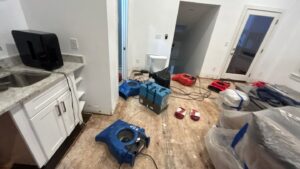
After a flood, most homes take between 3 to 5 days to dry completely when professional equipment is used. Without proper drying equipment, that timeline stretches to several weeks, and sometimes the structure never fully dries before secondary problems develop. The actual time depends on how much water entered, what materials absorbed it, and how quickly the drying process started.
If you’re standing in a waterlogged home right now wondering when things will return to normal, the honest answer is that every situation differs. A minor leak that affected one room dries faster than a basement that sat underwater for two days. Understanding what influences drying time helps you make better decisions about restoration and avoid costly mistakes that extend the process.
What Factors Determine How Long Your Home Takes to Dry?
Several variables affect drying timelines, and they interact with each other in ways that aren’t always obvious. Here’s what matters most:
- Water volume and depth: A few inches of standing water creates different challenges than three feet of flooding. More water means more saturation in structural materials.
- Duration of exposure: Materials that sat in water for 48 hours absorbed far more moisture than those exposed for only a few hours.
- Material types: Hardwood floors, drywall, carpet padding, and concrete all absorb and release water at different rates. Concrete can hold moisture for weeks.
- Humidity and airflow: A humid summer day in Tennessee works against you. Dry air and good circulation speed things up considerably.
- Structural design: Homes with crawl spaces, multiple floor levels, or finished basements present additional drying challenges compared to slab-on-grade construction.
The type of water matters too. Clean water from a broken supply line dries the same way as contaminated water, but sewage-affected flooding requires additional sanitation steps that can add time to the overall restoration process.
Why Does Professional Drying Work So Much Faster?
Opening windows and running household fans might seem like a reasonable approach, but it rarely works well. Homeowners throughout Nashville and Clarksville have learned this lesson the hard way. The problem is that household methods can’t create the conditions needed for rapid, thorough drying.
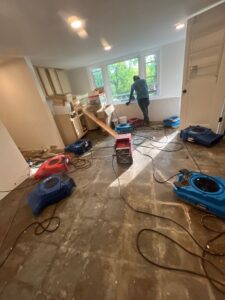
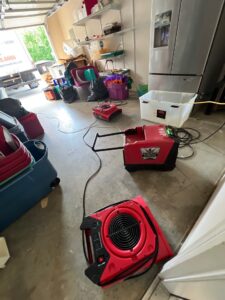
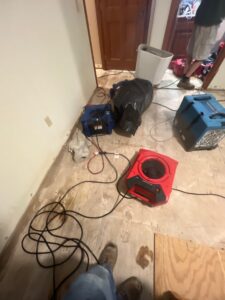
Professional water damage restoration uses industrial equipment designed specifically for structural drying:
- Commercial dehumidifiers: These units remove 30 to 50 times more moisture from the air than consumer models. They create the dry environment necessary for water to evaporate from materials.
- High-velocity air movers: Strategically placed fans create airflow patterns that pull moisture from walls, floors, and cavities. Placement matters more than quantity.
- Moisture meters and thermal imaging: Technicians can track exactly where water remains hidden and adjust equipment placement accordingly.
- Injectidry systems: These specialized tools dry wall cavities and spaces under cabinets without requiring demolition.
The combination of removing moisture from the air while actively moving air across wet surfaces creates drying conditions that simply cannot exist without professional equipment. This explains why a 3-day professional dry time might take 3 weeks with fans and open windows.
What Happens Day by Day During Professional Drying?
Understanding the typical progression helps set realistic expectations. Here’s what a standard whole-home drying process looks like:
Day One: Extraction and Setup
The first priority is removing standing water. Truck-mounted extractors and submersible pumps remove the bulk of liquid water within hours. Technicians then assess moisture levels throughout the structure, identify what materials can be saved versus what needs removal, and position drying equipment.
Saturated carpet padding almost always comes out. Wet insulation in wall cavities usually requires removal. These decisions happen early because leaving hopeless materials in place slows overall drying.
Days Two and Three: Active Drying
This is when most of the moisture leaves the structure. Dehumidifiers run continuously, air movers create constant circulation, and technicians return daily to check progress. Moisture readings drop significantly during this phase. Equipment may be repositioned as some areas reach target moisture levels before others.
Days Four and Five: Verification and Final Drying
Readings level off as the structure approaches equilibrium with acceptable moisture content. Technicians verify that all areas, including hidden spaces like wall cavities and subfloor assemblies, have dried properly. Equipment removal typically happens once readings confirm the structure has returned to normal moisture levels.
Which Parts of Your Home Take the Longest to Dry?
Not everything dries at the same rate. Knowing which materials and areas present challenges helps you understand why patience matters during restoration.
Concrete and Masonry
Concrete slabs and block walls absorb tremendous amounts of water and release it slowly. A wet concrete slab can take weeks to dry completely, even with professional equipment. This is particularly relevant for basement flooding situations. Rushing to install new flooring over damp concrete leads to problems within months.
Hardwood Flooring
Solid hardwood presents a difficult situation. It absorbs water and swells, then contracts as it dries. Depending on saturation levels and wood species, some floors can be dried and saved while others require replacement. The drying process for salvageable hardwood typically takes 5 to 7 days with proper equipment.
Wall Cavities
The space between drywall and exterior sheathing traps moisture effectively. Without intervention, wet insulation and framing lumber can take months to dry on their own. This is where mold growth becomes a serious concern, as dark, damp cavities provide ideal conditions for fungal growth.
Subfloor and Crawl Spaces
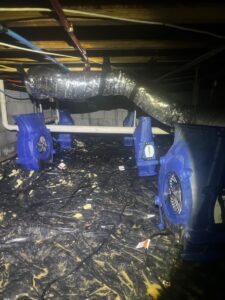
Plywood subfloors and crawl space framing often get overlooked during DIY drying attempts. Water wicks into these areas and stays hidden. Crawl spaces in particular tend to have poor natural ventilation, making them especially slow to dry without professional intervention.
What Mistakes Make Drying Take Longer?
Some well-intentioned actions actually extend drying time or create additional problems. Avoid these common errors:
- Waiting to start: Every hour of delay allows more water absorption. Materials that could have dried in 3 days after immediate response might require 7 days after a 48-hour delay.
- Using only fans: Air movement without dehumidification just circulates humid air around. The moisture stays in the space.
- Closing windows during dehumidifier operation: This seems counterintuitive, but dehumidifiers work best in enclosed spaces. Opening windows introduces outside humidity.
- Turning off equipment to save electricity: Stopping the process mid-cycle allows materials to reabsorb moisture from the air. Consistency matters.
- Replacing materials too soon: Installing new drywall over damp framing traps moisture and creates future problems. Verification testing should confirm dryness before reconstruction.
How Do You Know When Everything Is Actually Dry?
Surfaces feeling dry to the touch don’t mean the structure has dried completely. Moisture trapped in wall cavities, under flooring, or within concrete can’t be detected without proper equipment.
Professional restoration technicians use moisture meters that measure moisture content within materials, not just on the surface. Pin-type meters penetrate materials to measure internal moisture. Pinless meters use radio frequencies to detect moisture without damaging surfaces. Thermal imaging cameras reveal temperature differences that indicate trapped moisture.
The goal is reaching equilibrium moisture content, which means structural materials contain only the amount of moisture they would naturally hold under normal conditions. For most building materials in Tennessee’s climate, that target falls between 10% and 16% moisture content depending on the material.
When Should You Call a Professional Instead of Handling It Yourself?
Small spills and minor leaks can often be managed with household equipment if you act quickly. However, several situations clearly require professional water damage restoration:
- Standing water covers more than one room
- Water reached wall cavities or sat longer than 24 hours
- Flooding affected multiple levels of the home
- Water came from a contaminated source
- You notice musty odors developing after a water event
- Visible mold appears within days of the flooding
The cost of professional drying typically runs far less than repairing damage from incomplete drying. Replacing flooring, treating mold contamination, or addressing structural damage caused by prolonged moisture exposure adds up quickly.
Frequently Asked Questions
Can I speed up drying by turning up the heat?
Moderate heat helps evaporation, but excessive heat can cause materials to crack or warp. Keep temperatures between 70 and 80 degrees during drying. More important than heat is controlling humidity through dehumidification.
How can I tell if my walls are still wet inside?
Without a moisture meter, look for signs like paint bubbling, wallpaper peeling, or a musty smell near walls. Walls that feel cooler than surrounding areas may contain trapped moisture. Professional testing provides definitive answers.
Will my hardwood floors be ruined after flooding?
Not necessarily. Solid hardwood can often be dried and refinished if extraction and drying begin within 24 to 48 hours. Severely cupped or buckled boards may need replacement. Engineered hardwood has less chance of survival due to its layered construction.
Should I remove baseboards during drying?
Yes. Removing baseboards allows air to circulate at the wall-floor junction where water collects. This simple step can significantly improve drying efficiency in that critical area.
How long before mold becomes a concern?
Mold can begin growing within 24 to 48 hours under ideal conditions. This is why rapid response matters so much. Proper drying that begins promptly greatly reduces mold risk.
Is it safe to stay in my home during professional drying?
Usually yes, though the constant equipment noise can be disruptive. If contaminated water was involved, temporary relocation may be advisable until sanitation is complete.
Getting Your Home Back to Normal
Flooding is stressful, and the drying process requires patience. Rushing leads to problems that cost more time and money in the long run. Whether you’re dealing with a burst pipe, storm flooding, or an appliance failure, the same principles apply: remove water quickly, create proper drying conditions, verify results before reconstruction.
If your home has experienced flooding and you’re uncertain about the scope of damage or proper drying approach, contact a water damage restoration professional for an assessment. Getting expert eyes on the situation early helps you make informed decisions and avoid the extended timelines that come from incomplete drying.