Water damage creates a mess of problems, but few decisions frustrate homeowners more than figuring out what to do with wet insulation. Can you dry it out and save money, or does it need to come out entirely? The answer depends on the type of insulation, how long it stayed wet, and what kind of water soaked it. Fiberglass batts can sometimes be dried if caught within 24 to 48 hours and exposed only to clean water. Cellulose insulation almost always requires replacement because it absorbs moisture like a sponge and loses its structure. Spray foam insulation handles water better than most types, but still needs professional evaluation.
Making the wrong call here leads to serious consequences. Leave contaminated insulation in place, and you risk mold growth, structural damage, and poor indoor air quality for years. Remove insulation that could have been saved, and you spend money you did not need to spend. This decision requires understanding what happened, what you are dealing with, and what the realistic outcomes look like for each scenario.
Why Wet Insulation Creates Such a Difficult Problem
Insulation works by trapping air. Those tiny pockets of still air slow heat transfer and keep your home comfortable. When water enters the picture, everything changes. Water conducts heat about 25 times better than air, so wet insulation performs terribly at its primary job. But the performance issue is just the beginning.
Wet insulation holds moisture against building materials. Wood framing stays damp. Drywall stays damp. These conditions create the perfect environment for mold and wood rot. The insulation itself becomes a reservoir that keeps releasing moisture into surrounding materials even after the original water source is gone.
Homeowners throughout Nashville and Clarksville deal with this problem regularly, especially after storms, plumbing failures, or flooding events. The challenge is that insulation often sits hidden in walls, attics, and crawl spaces, where you cannot easily see what is happening. By the time you notice a musty smell or see visible damage, the problem may have been developing for weeks.
Understanding the Different Types of Insulation and How They React to Water
Not all insulation responds to water the same way. The material composition determines how it absorbs moisture, whether it can dry effectively, and what happens to its structure when wet.
Fiberglass Batt Insulation
Fiberglass itself does not absorb water. The glass fibers are non-porous. However, the paper or foil facing on batts does absorb moisture, and water gets trapped between the fibers. When fiberglass batts get wet, they compress and lose their loft. That fluffy thickness is what provides insulating value, so compressed batts work poorly even after drying.
The good news is that fiberglass can sometimes be dried successfully if conditions are right. The bad news is that the facing material often stays wet longer than the fibers, creating a mold risk even when the visible portion seems dry.
Cellulose Insulation
Cellulose insulation consists of recycled paper products treated with fire retardants and pest deterrents. Paper absorbs water readily. Wet cellulose clumps together, loses its coverage, and settles into dense mats that provide minimal insulation value. Even worse, the moisture creates ideal conditions for mold growth within the material itself.
Cellulose that gets significantly wet rarely makes sense to save. The material loses its effectiveness permanently, and the contamination risk is too high.
Spray Foam Insulation
Closed-cell spray foam resists water absorption well. The cells are sealed, so water cannot penetrate easily. Open-cell spray foam behaves differently because the cells are interconnected, allowing water to move through the material.
Closed-cell foam typically survives water exposure if the underlying structure is addressed. Open-cell foam needs more careful evaluation because moisture can become trapped within the foam and transfer to surrounding materials.
Mineral Wool Insulation
Mineral wool, including rock wool and slag wool products, handles moisture better than fiberglass or cellulose. The fibers do not absorb water, and the material maintains its structure when wet. However, mineral wool can still trap water against building materials and requires proper drying before closing up wall cavities.
The Critical Factors That Determine Whether Insulation Can Be Saved
Several variables influence the salvage decision. Restoration professionals evaluate all of these factors before recommending removal or drying.
Water Category Matters More Than Anything Else
The industry classifies water damage into three categories based on contamination level:
- Category 1 (Clean Water): Water from supply lines, faucets, or appliances without contaminants. This water is safe at the source. Examples include burst water heaters, broken ice maker lines, or rainwater that entered directly without contacting surfaces.
- Category 2 (Gray Water): Water with some contamination that could cause illness. Examples include washing machine discharge, dishwasher overflow, or toilet overflow containing urine but no feces.
- Category 3 (Black Water): Water with serious contamination, including sewage, floodwater from rivers or streams, or water that has contacted chemicals or decomposing materials.
Category 1 water gives you options. Insulation affected by clean water may be dried if you act quickly. Category 2 water makes drying riskier because contaminants remain in the material even after drying. Category 3 water eliminates the drying option for porous materials like insulation. Replacement becomes mandatory.
Time Since Water Contact
Every hour counts. Clean water does not stay clean for long when it saturates porous materials in a warm environment. Bacteria multiply. Mold spores germinate. What started as Category 1 water can become Category 2 or Category 3 water within 24 to 72 hours, depending on temperature and conditions.
Insulation that sat wet for more than 48 hours presents a significantly higher risk than insulation addressed within the first day. The longer moisture remains, the more likely you are to look at full replacement regardless of the water source.
Accessibility for Drying
Insulation behind drywall creates a much different situation than exposed insulation in an attic. Drying insulation in place requires airflow across the material. If the insulation is trapped in a wall cavity with no air circulation, moisture removal becomes extremely difficult without removing the drywall anyway.
Sometimes the cost of accessing insulation for drying exceeds the cost of simply replacing it. This practical consideration factors into professional recommendations.
How Professionals Evaluate Wet Insulation
Experienced restoration technicians use specific tools and methods to assess insulation condition. This evaluation goes beyond what homeowners can determine visually.
Moisture Meters and Readings
Professional-grade moisture meters detect moisture levels in building materials. Technicians take readings at multiple points to map the extent of water intrusion and monitor drying progress. Insulation that appears dry on the surface may still hold significant moisture deeper in the material.
Thermal Imaging
Infrared cameras reveal temperature differences that indicate moisture presence. Wet materials appear cooler than dry materials because evaporation removes heat. This technology helps identify water migration patterns and find hidden wet areas behind walls and ceilings.
Physical Inspection
There is no substitute for actually looking at the insulation. Technicians check for discoloration, odor, structural changes, and visible mold growth. They assess the facing material separately from the insulation itself because damage patterns often differ.
Documentation for Insurance
Proper documentation protects you during the claims process. Photographs, moisture readings, and written assessments support replacement recommendations when insurance adjusters review the claim. Rushing to remove materials without documentation can complicate coverage.
Signs That Insulation Definitely Needs Replacement
Some situations leave no room for debate. Replace the insulation immediately if you observe any of these conditions:
- Visible mold growth on the insulation or facing material
- Sewage contact or floodwater exposure
- Persistent musty odor that does not improve with drying
- Cellulose insulation that has clumped, settled, or lost coverage
- Fiberglass batts that remain compressed after drying attempts
- Insulation that stayed wet for more than 72 hours
- Contamination from rodents, insects, or decomposing materials
- Water damage combined with fire or smoke exposure
Homeowners sometimes try to save money by keeping questionable insulation. This approach frequently costs more in the long run when mold develops or energy bills increase due to degraded insulation performance.
The Drying Process for Salvageable Insulation
When conditions support drying rather than replacement, the process requires proper equipment and monitoring. Simply opening windows and running box fans does not achieve professional-grade drying.
Commercial Dehumidification
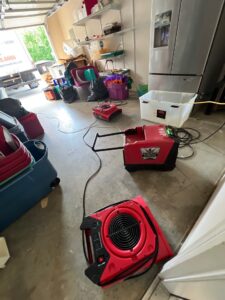
Industrial dehumidifiers remove moisture from the air much faster than household units. Lower humidity accelerates evaporation from wet materials. Proper dehumidification requires calculating the cubic footage of affected areas and deploying sufficient equipment capacity.
Air Movement Strategy
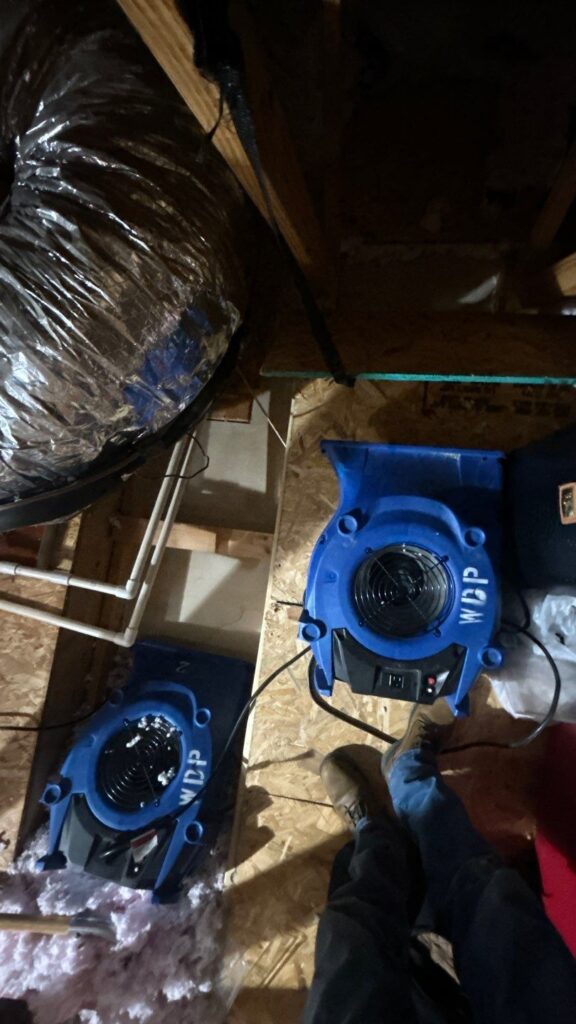
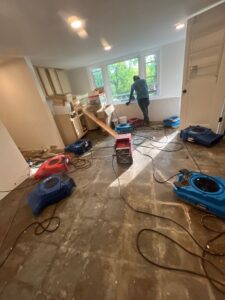
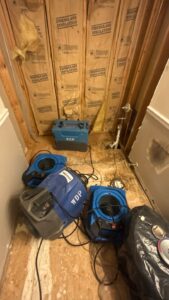
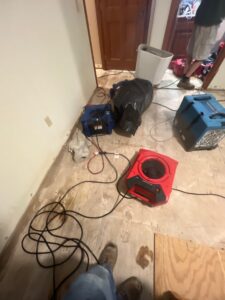
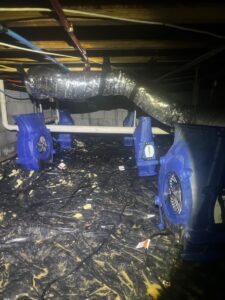
High-velocity air movers direct airflow across wet surfaces to enhance evaporation. Technicians position these units strategically to create circulation patterns that reach all affected materials. Random fan placement wastes energy and extends drying time.
Temperature Management
Warmer air holds more moisture and promotes faster drying. Maintaining appropriate temperatures throughout the drying process improves efficiency and reduces total drying time.
Monitoring and Verification
Drying is not complete when materials feel dry. Professional restoration includes ongoing moisture monitoring with documented readings. The goal is to reach and maintain specific moisture content levels that match unaffected materials in the same structure.
What Happens When Insulation Gets Removed
Removing wet insulation is just one step in proper water damage restoration. The process involves several additional considerations:
- Containment to prevent the spreading of contaminants to unaffected areas
- Personal protective equipment for workers handling potentially contaminated materials
- Proper bagging and disposal according to local regulations
- Inspection and treatment of exposed wall cavities, framing, and sheathing
- Complete drying of structural materials before installing new insulation
- Antimicrobial treatment when appropriate
- Replacement insulation installation after clearance testing
Skipping steps in this sequence creates problems. Installing new insulation over damp framing, for example, starts the cycle of moisture damage all over again.
Cost Considerations and Insurance Coverage
Insurance policies vary significantly in how they cover insulation damage. Most homeowner policies cover sudden and accidental water damage, which typically includes insulation affected by burst pipes or appliance failures. Gradual damage from slow leaks or poor maintenance may not receive coverage.
Flood damage requires separate flood insurance. Standard homeowner policies exclude flooding, so insulation damaged by rising water may not be covered without that additional policy.
When filing claims, having professional documentation strengthens your position. Restoration companies familiar with insurance processes can provide the detailed assessments and photographs that adjusters need to approve claims.
Frequently Asked Questions
Can I dry wet insulation myself without professional equipment?
Minor moisture from a small, clean water incident might dry with household equipment if you catch it immediately and have good access to the affected area. Significant water intrusion, contaminated water, or insulation in enclosed wall cavities requires professional equipment and expertise. The risk of incomplete drying and subsequent mold growth makes DIY approaches inadvisable for most situations.
How can I tell if the insulation in my walls is wet without removing drywall?
Moisture meters can detect elevated moisture through drywall, and thermal imaging reveals temperature patterns consistent with wet materials. Both methods have limitations, and sometimes opening a small inspection hole provides the clearest answer. Persistent musty odors, water stains, or bubbling paint on walls often indicate moisture problems behind the surface.
Does wet insulation always grow mold?
Not always, but the conditions that follow water damage favor mold growth. Mold needs moisture, organic material, and appropriate temperatures. Wet insulation provides all three. The longer moisture remains, the higher the probability of mold development. Acting within the first 24 to 48 hours significantly reduces mold risk.
Will my home be uncomfortable while insulation is removed?
You will likely notice temperature differences in affected areas until new insulation is installed. The duration depends on how quickly drying is achieved and new insulation is placed. Professional restoration teams work to minimize this uncomfortable period while still ensuring proper drying before closing walls.
Should I replace insulation with a different type after water damage?
This depends on your goals and budget. If your current insulation performed poorly during the water event, upgrading to a more moisture-resistant option like closed-cell spray foam might make sense. However, properly installed fiberglass or mineral wool insulation also performs well when combined with appropriate moisture barriers and drainage. A restoration professional can discuss options that suit your specific situation.
Making the Right Decision for Your Home
Wet insulation demands prompt attention and honest assessment. Hoping the problem will resolve itself invites mold growth, structural damage, and unhealthy indoor conditions. The materials themselves usually reveal whether salvage or replacement makes sense, but interpreting those signals correctly requires experience.
If you are dealing with water damage and are uncertain about your insulation, getting a professional evaluation protects your home and your investment. A qualified restoration team can assess the situation, document findings for insurance purposes, and recommend the appropriate course of action based on what they actually find rather than assumptions.
Contact a water damage restoration professional to inspect your property and get clear answers about your insulation. Waiting costs more than acting, and the right decision now prevents larger problems down the road.