A leak under the kitchen or bathroom sink often seems minor at first. You notice some dampness, wipe it up, and assume the problem is solved. But what you cannot see matters far more than the puddle you cleaned. The honest answer to whether cabinets need removal after a leak depends on how long the water sat, what materials the cabinets are made from, and whether moisture has penetrated the structure itself. In many cases, cabinets that look fine on the surface have already started breaking down inside, and keeping them installed only delays bigger problems.
Homeowners across Nashville and Clarksville deal with this situation regularly, especially in older homes where plumbing connections wear out gradually. Knowing what signs to look for can save you from wasting money on cabinets that cannot be saved or, worse, from leaving damaged materials in place that lead to mold growth and structural issues down the road.
Why Water Damage to Cabinets Is Often Worse Than It Looks
Most kitchen and bathroom cabinets are not built from solid wood. They are constructed using particleboard, MDF, or plywood with veneer finishes. These materials react very differently to moisture than solid hardwood does.
Particleboard and MDF absorb water like a sponge. Once saturated, they swell, warp, and lose structural integrity permanently. Even after drying out, these materials never return to their original strength. The fibers have separated, the adhesives have weakened, and the board crumbles under pressure that it previously handled without issue.
Plywood holds up better but still suffers when exposed to prolonged moisture. The layers can delaminate, and the edges are particularly vulnerable to water intrusion. Solid wood cabinets handle leaks more gracefully, though they can still warp, crack, or develop mold if the exposure lasts long enough.
The tricky part is that damage often hides in places you cannot easily inspect. The cabinet floor, the back panel, and the areas behind drawers may be thoroughly compromised while the doors and visible surfaces look perfectly normal.
Signs That Cabinets Have Sustained Serious Water Damage
Before deciding whether removal is necessary, you need to assess the actual condition of the cabinets. Some indicators are obvious, while others require closer examination.
Visible Structural Changes
Look for these warning signs that suggest the cabinet materials have absorbed significant moisture:
- Swelling or bubbling along the bottom edges of cabinet boxes
- Doors that no longer close properly or have warped noticeably
- Drawer bottoms that sag or feel soft when pressed
- Delamination where the veneer peels away from the substrate
- Visible water stains that have penetrated beyond surface discoloration
- Cabinet floor that feels spongy or gives under light pressure
Smell and Discoloration
A musty odor coming from inside the cabinet, even after cleaning, suggests mold growth has begun. This typically means moisture has been present long enough to create conditions where spores can thrive. Dark staining on the back panel or floor, particularly if it has spread beyond the immediate leak area, indicates water traveled through the material rather than just sitting on top.
Structural Weakness
Test the cabinet floor by pressing firmly in several spots. Healthy particleboard or plywood resists pressure uniformly. Damaged material will flex, feel soft, or even break through. Check where the cabinet box connects to the wall and to adjacent cabinets. If the mounting points have loosened or the fasteners pull through easily, the material has lost too much integrity to remain functional.
How Long the Water Sat Matters More Than How Much Water
A sudden large leak that gets discovered immediately often causes less permanent damage than a slow drip that goes unnoticed for weeks. The duration of exposure is critical because it determines how deeply moisture penetrates and whether conditions favor mold growth.
Water that sits for less than 24 hours on cabinet surfaces can often be addressed with thorough drying, assuming the materials did not absorb significant moisture. Beyond 48 hours, particleboard and MDF have typically absorbed enough water that structural damage is likely. After 72 hours, mold growth becomes probable in warm, humid conditions.
The challenge is that most people do not know exactly when a slow leak started. If you discover a leak and the cabinet materials are already swollen or soft, assume the water has been present long enough to cause serious damage regardless of when you first noticed it.
What Professional Assessment Involves
A restoration professional uses tools and techniques that go beyond visual inspection. Moisture meters can detect elevated readings inside materials that appear dry on the surface. Thermal imaging can reveal moisture patterns behind walls and under flooring that connect to the cabinet area.
During assessment, a technician examines not just the cabinets themselves but the surrounding areas. Water from a sink leak often travels along the cabinet floor, down into the subfloor, and into adjacent spaces. A cabinet that needs removal might be the visible symptom of a larger problem affecting the floor structure or the wall behind it.
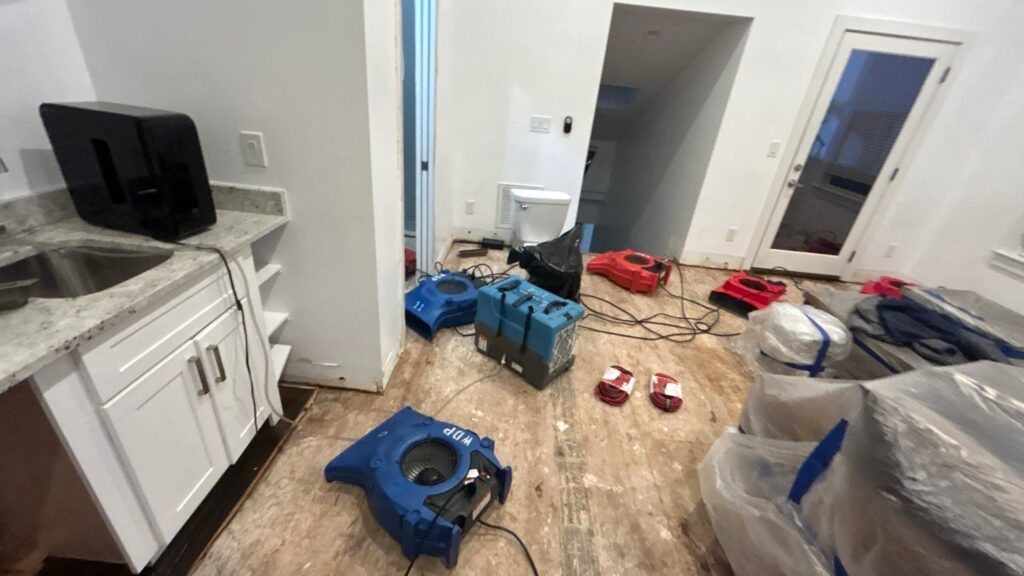
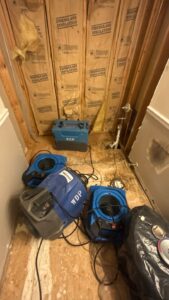
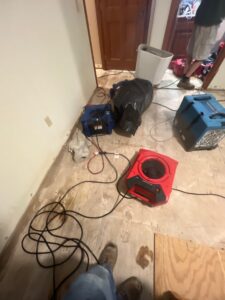
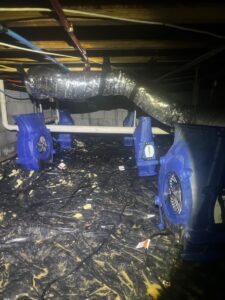
In cases where the subfloor beneath the cabinet has also absorbed water, leaving the cabinet in place prevents proper drying of the floor system. Removing the cabinet allows access for industrial drying equipment and inspection of the subfloor condition.
When Cabinets Can Be Saved
Not every leak requires cabinet removal. If the following conditions apply, the cabinets may be salvageable:
- The leak was discovered within 24 hours
- Water did not penetrate the cabinet floor or back panel
- Materials show no swelling, warping, or delamination
- No musty odor is present after thorough cleaning and drying
- Moisture meter readings return to normal range after drying
- The cabinet is made from solid wood or marine-grade plywood
Even when cabinets can be saved, they may need components replaced. A damaged cabinet floor can sometimes be cut out and rebuilt if the box structure remains sound. However, this repair work must be done properly to avoid trapping moisture that leads to problems later.
When Removal Is the Only Reasonable Option
Certain conditions make cabinet removal necessary regardless of how inconvenient or costly it seems:
- Particleboard or MDF materials have swollen or become soft
- Mold growth is visible or suspected based on odor
- The cabinet floor has lost structural integrity
- Water has traveled into the subfloor or wall cavity behind the cabinet
- The leak was present for an extended period before discovery
- Moisture readings remain elevated despite drying efforts
Trying to save cabinets that should be removed creates ongoing problems. Trapped moisture continues damaging surrounding materials. Mold that develops inside enclosed spaces spreads to other areas. The cabinet eventually fails anyway, often at a less convenient time, and the delay has allowed additional damage to accumulate.
The Mold Factor in Cabinet Decisions
Mold growth changes the calculation entirely. Once mold establishes itself inside cabinet materials, cleaning the surface does not solve the problem. The root system penetrates into porous materials and continues growing even after visible mold is wiped away.
Cabinets with active mold growth generally need removal not just for structural reasons but for indoor air quality concerns. Attempting to remediate mold inside enclosed cabinet spaces while leaving the cabinets installed rarely succeeds completely. The geometry of cabinet construction creates too many hidden areas where mold can survive and regrow.
If you discover mold during your inspection, avoid disturbing it before consulting a professional. Improper cleanup can spread spores throughout the home and create a larger remediation project than necessary.
What to Expect During Cabinet Removal for Water Damage
If removal is necessary, the process involves more than just taking out cabinets. Countertops typically need removal first, which may damage them depending on how they were installed. Plumbing connections must be disconnected, and often the sink and disposal are removed temporarily.
Once cabinets are out, the restoration team can properly assess and dry the subfloor and wall materials. This work needs to happen before new cabinets are installed. Putting new cabinets over a damp subfloor simply transfers the moisture problem to new materials.
The timeline for this process varies based on how extensive the water damage is and how long drying takes. Rushing to install new cabinets before the space is truly dry creates predictable problems within months.
Frequently Asked Questions
Can I dry out water-damaged cabinets myself?
Surface moisture can sometimes be addressed with fans and dehumidifiers. However, once water has penetrated into particleboard or MDF materials, DIY drying cannot reverse the structural damage. The materials may feel dry eventually, but they will not regain their original strength.
How quickly does mold grow in wet cabinets?
Mold can begin growing within 24 to 48 hours in warm, humid conditions. Cabinet interiors provide ideal conditions because they trap moisture and limit air circulation. If you cannot dry cabinets completely within this timeframe, mold growth becomes increasingly likely.
Will my homeowner’s insurance cover cabinet replacement after a leak?
Coverage depends on your specific policy and the cause of the leak. Sudden, accidental damage is typically covered, while gradual damage from deferred maintenance may not be. Your policy language determines what applies to your situation.
Can cabinet doors be reused if the box is replaced?
Sometimes yes, if the doors escaped water damage and the new cabinet boxes match the original dimensions. This can reduce replacement costs when only the lower cabinet boxes need replacement while upper cabinets and doors remain in good condition.
How do I know if water went into the wall behind the cabinet?
Signs include water stains on the wall above the cabinet, damaged baseboards adjacent to the cabinet, or musty odors that persist after the cabinet dries. A moisture meter can detect elevated readings inside the wall, confirming that water traveled beyond the cabinet.
Is it safe to use cabinets while deciding whether to replace them?
If the cabinet floor is soft or the structure feels unstable, avoid placing heavy items inside. A weakened cabinet floor can collapse unexpectedly. Light use is generally acceptable while you arrange for proper assessment, but do not delay that assessment.
Making the Right Decision for Your Situation
The question of whether cabinets need removal after a leak does not have a universal answer. It depends on timing, materials, extent of exposure, and whether secondary damage like mold has developed. What matters most is making an informed decision based on actual conditions rather than hoping the problem will resolve itself.
If you are dealing with water-damaged cabinets and are uncertain about the right approach, having a professional assess the situation gives you the information needed to decide. The cost of an assessment is minor compared to the expense of leaving damaged materials in place or replacing cabinets unnecessarily.
Contact a local water damage restoration company to inspect the affected area, check moisture levels in surrounding materials, and provide a clear recommendation based on what they find. Getting accurate information early prevents small problems from becoming expensive ones.