That musty smell lingering after water damage comes from mold and mildew growth, bacterial activity, and the breakdown of organic materials that stayed wet too long. The odor develops when moisture gets trapped in porous surfaces like drywall, carpet padding, wood framing, and insulation. Removing these smells requires addressing the moisture source completely, removing contaminated materials, and treating affected areas with proper antimicrobial solutions. Simply masking the odor with air fresheners will not solve the problem and can actually make things worse by delaying proper remediation.
Homeowners throughout the Nashville and Clarksville areas deal with these persistent odors regularly, especially after basement flooding, slow leaks behind walls, or stormwater intrusion. Understanding why these smells develop and what actually eliminates them can save you from ongoing frustration and potential health concerns.
Why Water Damage Creates That Distinctive Musty Odor
The smell itself comes from microbial volatile organic compounds, which are gases released by mold, mildew, and bacteria as they feed on wet organic materials. These organisms start growing within 24 to 48 hours after water exposure, and once established, they produce that unmistakable damp, earthy, musty scent.
Several factors influence how quickly odors develop and how strong they become:
- The type of water involved, with sewage and gray water creating worse odors than clean water
- How long materials stay wet before drying began
- The temperature and humidity levels in the affected space
- The types of materials that absorbed water
- Whether the water reached hidden cavities, like wall interiors or subfloor spaces
Carpet padding is particularly problematic because it acts like a sponge and rarely dries completely without removal. Similarly, particleboard subflooring and laminate materials absorb water readily and often cannot be salvaged once saturated.
Common Sources of Persistent Odors After Water Events
Sometimes the source of the smell is obvious. Other times, tracking down where the odor originates requires some detective work. Understanding the most common culprits helps narrow down what needs attention.
Hidden Moisture in Wall Cavities
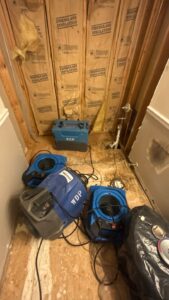
Water running down inside walls from roof leaks, plumbing failures, or window intrusion often goes unnoticed until the smell becomes apparent. The drywall may look fine from the outside, while mold colonies establish themselves on the backside of the paper facing. Fiberglass insulation holds moisture and provides an excellent environment for microbial growth.
Wet Subfloor and Floor Systems
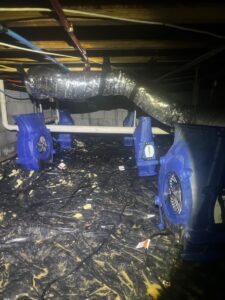
Water that seeps under flooring materials can saturate the subfloor, floor joists, and any insulation underneath. Crawl spaces are especially vulnerable because they already tend toward higher humidity levels. When flood water or plumbing leaks reach these areas, the combination of moisture, organic materials, and limited air circulation creates ideal conditions for odor-producing organisms.
HVAC Ductwork Contamination
If water reaches your duct system, those metal or flex ducts can harbor moisture, debris, and microbial growth. Every time the system runs, it can circulate musty air throughout the entire building. The insulation lining inside some ductwork is nearly impossible to clean properly once contaminated.
Saturated Concrete and Masonry
Concrete is porous and absorbs water readily. Basement floors and foundation walls can hold moisture for weeks or months after a flooding event. The moisture migrates through the concrete slowly, and any organic materials in contact with these surfaces, like carpet tack strips, wood framing, or drywall, will continue to be affected.
Why Air Fresheners and Deodorizers Do Not Work
Reaching for an air freshener or commercial deodorizer when you notice musty smells is understandable, but it addresses only the symptom while ignoring the cause. These products work by either masking odors with stronger fragrances or temporarily neutralizing airborne odor molecules.
The problem is that the source keeps producing new odor compounds as long as moisture and microbial activity continue. You might notice a temporary improvement, but the smell returns within hours or days. Worse, relying on masking agents can delay proper treatment while the underlying damage spreads.
Some homeowners try ozone generators or hydroxyl machines they find online. While these technologies have legitimate applications in professional remediation, improper use can be ineffective or even harmful. Professional restoration technicians use these tools as part of a complete process, not as a shortcut around proper moisture removal and material remediation.
The Right Approach to Eliminating Musty Smells
Effective odor elimination follows a specific sequence. Skipping steps or doing them out of order usually means the smell returns.
Stop the Moisture Source
Nothing else matters if water continues entering the space. Whether the source is a leaking pipe, compromised roof, foundation crack, or condensation issue, it needs to be fixed before remediation can succeed. Drying out materials while water continues to enter is an exercise in frustration.
Remove Contaminated Materials
Some materials cannot be adequately cleaned or dried and must be removed. This typically includes:
- Carpet padding in most cases
- Drywall that has been wet for more than 48 hours or shows visible mold
- Wet insulation of any type
- Particleboard or OSB that has swelled or delaminated
- Ceiling tiles and other porous materials that absorbed contaminated water
The decision about whether materials can be saved depends on several factors, including what type of water caused the damage, how long materials stayed wet, and whether microbial growth is visible. A professional assessment helps determine what stays and what goes.
Dry the Structure Completely
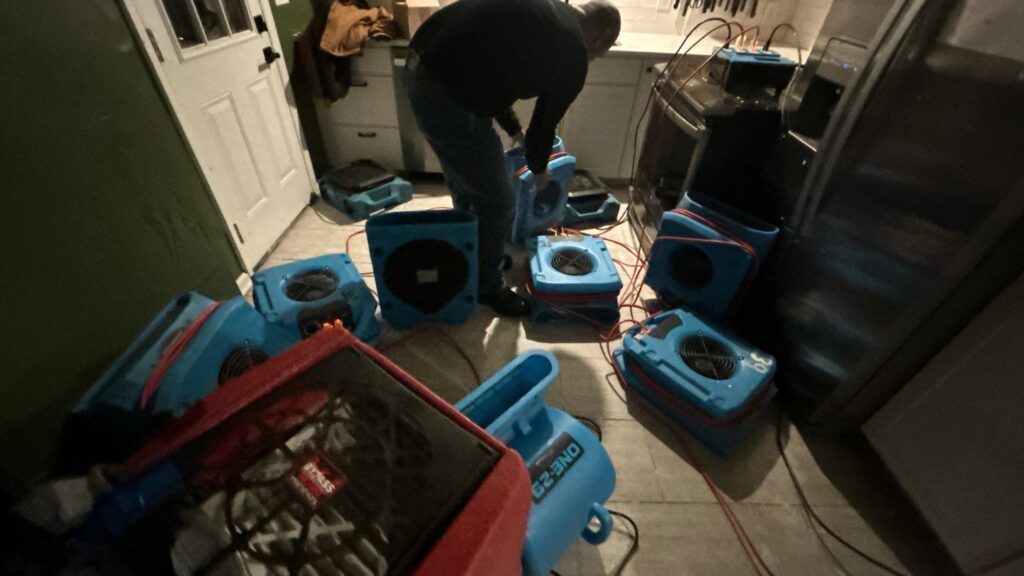
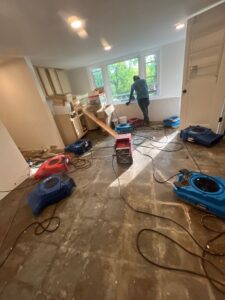
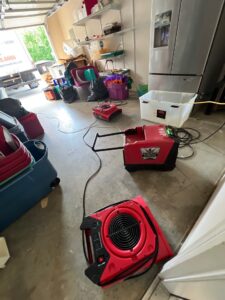
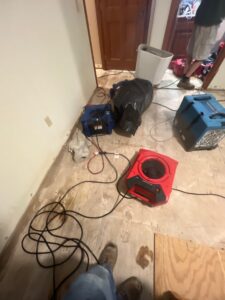
Thorough drying is critical and often takes longer than people expect. Professional drying equipment includes commercial dehumidifiers that remove far more moisture than residential units, air movers positioned strategically to create airflow across wet surfaces, and monitoring equipment that measures moisture content inside materials rather than just on surfaces.
Drying concrete, for example, can take weeks depending on its thickness and the extent of saturation. Wood framing and subfloors need to reach specific moisture content levels before they can be covered again. Rushing this process almost guarantees the odor will return.
Clean and Treat Affected Surfaces
Surfaces that were wet but can be saved need proper cleaning and treatment. This goes beyond wiping things down with household cleaners. Professional remediation involves antimicrobial solutions designed to address microbial growth on structural materials, HEPA vacuuming to remove spores and debris, and sealants that encapsulate any remaining contamination on surfaces like concrete or wood framing.
Address Air Quality
Once the source materials have been addressed, treating the air helps eliminate residual odors. This might include air scrubbing with HEPA filtration, thermal fogging, ozone treatment, or hydroxyl generators. The appropriate method depends on the situation and should be determined by someone experienced with these technologies.
What You Can Do Before Professionals Arrive
If you are dealing with recent water damage and waiting for professional help, there are steps that can help limit odor development and overall damage.
- Remove standing water with a wet vacuum, mop, or pump if you can do so safely
- Move furniture off the wet carpet to prevent staining and allow airflow
- Open windows if the outdoor humidity is lower than the indoor humidity
- Run fans to promote air circulation, but not if visible mold is present
- Remove wet area rugs and take them outside to dry
- Pull back the carpet from the edges, if possible, to help the subfloor dry
- Avoid using central HVAC if you suspect water has reached the ductwork
Speed matters significantly with water damage. The difference between starting drying within a few hours versus waiting a day or two can be the difference between saving materials and having to tear them out.
When to Call a Professional Restoration Company
Some water damage situations are manageable for handy homeowners, but many require professional intervention. Consider calling for help when:
- The affected area is larger than a small bathroom
- Water sat for more than 24 to 48 hours before discovery
- The water source was sewage, groundwater, or floodwater
- Water reached wall cavities, ceilings, or other hidden spaces
- You notice musty smells even after your drying efforts
- Anyone in the household has respiratory sensitivities
- You need documentation for an insurance claim
Professional restoration companies have moisture detection equipment that can find hidden wet areas, industrial drying equipment that works much faster than household tools, and experience determining what materials can be saved versus what needs removal. When odors persist despite your efforts, that usually indicates moisture or contamination hiding somewhere that needs professional attention.
Preventing Future Musty Odors
After going through water damage remediation, most homeowners want to avoid repeating the experience. Some preventive measures can reduce your risk.
Control Indoor Humidity
Keeping indoor humidity below 60 percent, and ideally between 30 and 50 percent, inhibits mold and mildew growth. This is especially important in basements, crawl spaces, and bathrooms. A good quality dehumidifier in problem areas can make a significant difference.
Address Plumbing Issues Promptly
Small leaks become big problems over time. That slow drip under the sink or the toilet that occasionally runs can create enough moisture for microbial growth. Fix these issues quickly rather than waiting until they become obvious water damage situations.
Maintain Your Home’s Exterior
Gutters that drain properly, downspouts that direct water away from the foundation, proper grading around the home, and well-maintained roofing all help keep water outside where it belongs. Regular inspection and maintenance of these systems prevents many water intrusion problems.
Ventilate Problem Areas
Bathrooms need exhaust fans that actually vent to the exterior, not into the attic. Crawl spaces may benefit from vapor barriers, proper ventilation, or encapsulation depending on the specific situation. Kitchens need range hoods that remove moisture from cooking.
Frequently Asked Questions
How long does the musty smell last after water damage?
Without proper remediation, musty odors can persist indefinitely because the organisms producing the smell continue growing as long as moisture remains. With professional drying and treatment, odors typically resolve within days to a couple of weeks, depending on the extent of damage.
Can I remove musty smells myself?
Minor situations involving small areas and clean water may be manageable with thorough drying and cleaning. However, persistent odors or larger affected areas usually indicate hidden moisture or contamination that requires professional equipment and expertise to resolve.
Does a musty smell always mean mold?
Musty odors strongly suggest mold or mildew presence, though bacteria and other organisms can also produce similar smells when organic materials stay wet. The smell indicates microbial activity that should be addressed regardless of the specific organism involved.
Will running a dehumidifier eliminate musty smells?
A dehumidifier helps by reducing ambient moisture, which slows microbial growth. However, it will not eliminate existing contamination or remove moisture trapped inside materials. Dehumidification is one part of the solution, not the complete answer.
Is it safe to stay in a home with musty smells after water damage?
Musty smells indicate microbial activity that can affect indoor air quality. People with allergies, asthma, or compromised immune systems may experience symptoms. While brief exposure is unlikely to cause serious harm in otherwise healthy individuals, persistent odors should prompt professional evaluation and remediation.
Why does my house smell musty only when it rains?
This pattern usually indicates moisture intrusion happening during rain events, such as through foundation cracks, window seals, or roof issues. The smell becomes noticeable when fresh moisture reaches existing contamination and increases microbial activity.
Getting Rid of That Smell for Good
Musty odors after water damage are more than just unpleasant. They signal ongoing moisture problems and microbial activity that can affect your home’s structure and your family’s health. The smell itself is actually useful as an early warning system, telling you that something needs attention before it becomes a bigger problem.
Successful odor elimination requires addressing the complete chain: stopping the water source, removing materials that cannot be saved, drying everything thoroughly, treating remaining surfaces, and improving air quality. Shortcuts and masking agents just delay the inevitable and often allow damage to worsen.
If you are dealing with persistent musty smells after water damage, contact a professional restoration company for an assessment. They can identify hidden moisture, determine what remediation steps are needed, and help you get your home back to a healthy condition without that lingering smell.