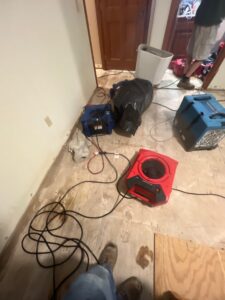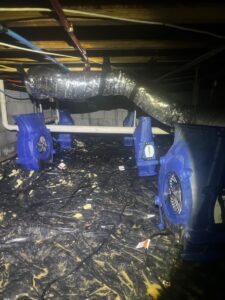
To dry carpet and padding correctly after water damage, you need to extract standing water immediately, lift the carpet from the tack strips, remove the padding entirely in most cases, and run commercial air movers and dehumidifiers continuously until moisture readings return to normal. The padding almost always needs replacement because it absorbs water like a sponge and rarely dries completely before mold growth begins. Acting within the first 24 to 48 hours gives you the best chance of saving the carpet itself.
I’ve seen homeowners across Nashville and Clarksville make the same mistakes when dealing with wet carpet. They assume running a box fan for a few hours will fix the problem, or they wait too long, hoping things will dry on their own. Neither approach works, and both lead to bigger problems down the road. Here’s what actually needs to happen when water soaks into your flooring.
Why Speed Matters When Carpet Gets Wet
Water damage creates a countdown clock. The moment moisture enters your carpet fibers and soaks into the padding underneath, bacteria and mold spores start multiplying. Within 24 hours, you’ll notice a musty smell developing. Within 48 to 72 hours, mold colonies can establish themselves in the padding, the carpet backing, and even the subfloor beneath.
The type of water matters too. Clean water from a supply line break is the least concerning, but it doesn’t stay clean for long. Once it hits your floor, picks up dirt, and sits stagnant, the contamination level rises. Gray water from appliances or minor sewage issues requires more aggressive treatment. Black water from sewage backups or external flooding typically means the carpet and padding both need to go, no exceptions.
Temperature plays a role as well. Warm, humid conditions accelerate microbial growth significantly. If your water damage happens during a Tennessee summer, you have even less time to respond effectively.
Step One: Stop the Water Source and Extract Standing Water
Before you can dry anything, you need to stop whatever caused the flooding. This seems obvious, but plenty of people start mopping while the supply line is still spraying water. Shut off the water main if needed. Unplug any electrical devices in the affected area to avoid shock hazards.
Standing water extraction should happen as fast as possible. For minor situations, a wet/dry shop vacuum can remove surface water from carpet. Work in overlapping passes and empty the tank frequently. For significant flooding, professional extraction equipment makes a dramatic difference. Commercial extractors pull hundreds of gallons per hour compared to a shop vacuum’s slower pace.
Key extraction tips:
- Start from the edges of the wet area and work inward
- Make multiple passes over the same areas
- Move furniture out of the space entirely if possible
- Don’t assume carpet feels dry just because you can’t see standing water
What Happens to Carpet Padding After Water Exposure
Carpet padding presents the biggest challenge in water damage situations. That foam or fiber layer between your carpet and subfloor acts like a giant sponge. It absorbs water quickly and releases it slowly. Even worse, the padding stays compressed under the carpet weight, limiting airflow and trapping moisture against the subfloor.
Most restoration professionals recommend removing padding entirely after significant water intrusion. The cost of new padding is minimal compared to the risk of mold development underneath carpet you thought was dry. Padding that stays wet for more than 24 hours rarely comes back to a safe condition.
There are limited exceptions. If clean water affected a small area and you caught it within a few hours, professional-grade drying equipment might save the padding. But this requires lifting the carpet completely, setting up commercial air movers directed at the padding, and verifying with moisture meters that everything dried properly. Most homeowner equipment simply cannot accomplish this.
The Correct Process for Lifting and Drying Carpet
Saving the carpet itself requires separating it from the wet padding and creating airflow on both sides. Here’s how professionals approach this:
Releasing from tack strips: Carpet attaches to wooden tack strips around the room perimeter. Using a flat tool like a stiff putty knife, the carpet edge gets pulled away from these strips. Work carefully to avoid tearing the carpet backing.
Folding back the carpet: Once released, the carpet gets folded back in sections to expose the padding underneath. For larger rooms, this might mean folding in quarters.
Removing the padding: The padding typically comes up in sections. Cut it into manageable pieces and dispose of it properly. Padding that held contaminated water should be bagged before carrying through other areas of the home.
Treating the subfloor: With the padding removed, inspect the subfloor carefully. Plywood or OSB subflooring absorbs water and may need treatment with antimicrobial solutions. Concrete subflooring still holds moisture that must evaporate before reinstallation.
Drying the carpet separately: The carpet itself needs airflow on both the face and backing. Commercial floating techniques allow air to circulate underneath while the carpet remains in position.
Equipment Required for Proper Carpet Drying
Household fans and opening windows won’t cut it for serious water damage. The physics of evaporation requires specific conditions that typical home equipment cannot create.
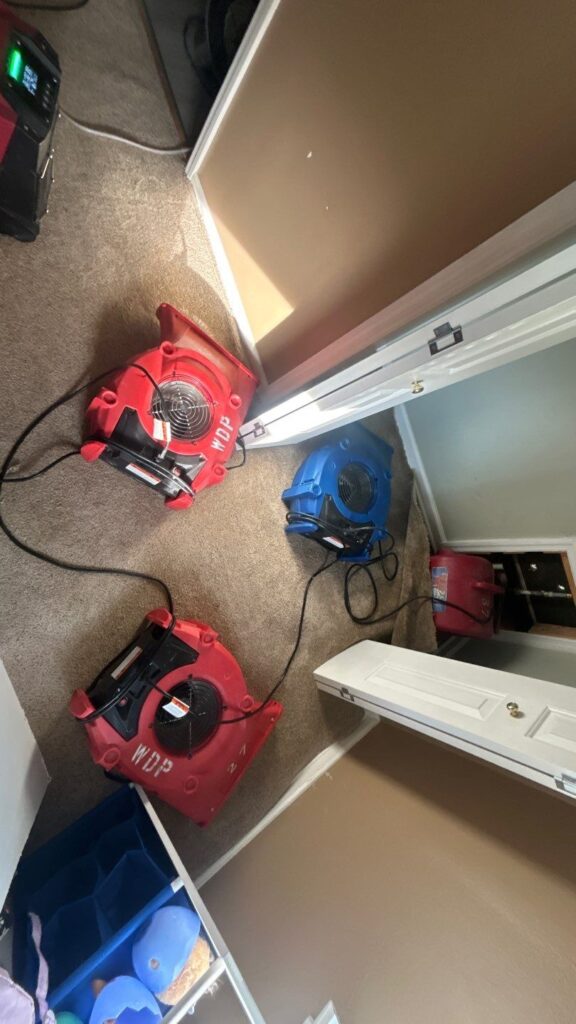
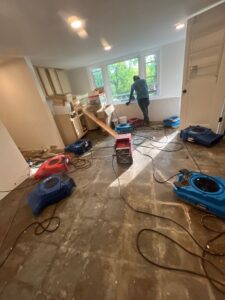
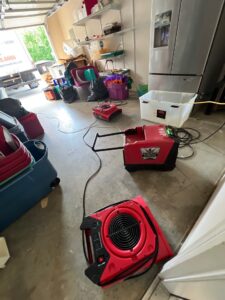
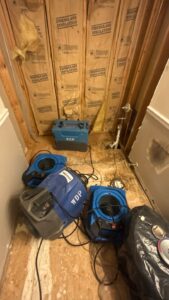
Air movers: Commercial air movers push high-velocity air across surfaces at specific angles. They create rapid evaporation at the carpet surface while directing moisture upward, where dehumidifiers can capture it. Professional jobs use multiple units positioned strategically around the affected area.
Dehumidifiers: As water evaporates from carpet and padding, that moisture needs somewhere to go. Without adequate dehumidification, humidity levels spike, and the evaporation process slows or stops. Commercial dehumidifiers remove dozens of gallons of water from the air daily.
Moisture meters: You cannot tell by touch whether the carpet is truly dry. Moisture meters measure actual water content in carpet, padding, and subfloor materials. Drying continues until readings return to normal baseline levels.
Injection systems: Some professional setups inject warm, dry air directly beneath the carpet without fully removing it. This works well for certain situations but requires specialized equipment.
How Long Does Carpet Take to Dry Completely
Proper drying typically takes 24 to 72 hours, depending on several factors. The amount of water involved, ambient humidity, equipment quality, and subfloor type all affect the timeline.
Rushing the process leads to problems. A carpet that feels dry on the surface may still hold moisture deep in the fibers or backing. Reinstalling padding over a damp subfloor creates a hidden moisture trap that promotes mold growth for months afterward.
Monitoring throughout the drying process ensures nothing gets missed. Daily moisture readings track progress and confirm when levels reach acceptable thresholds. Stopping equipment too early because things seem dry almost always backfires.
When Carpet Cannot Be Saved
Not every water-damaged carpet is salvageable. Certain conditions mean replacement is the only safe option:
- Sewage or black water contamination at any level
- Water exposure lasting more than 72 hours before treatment began
- Visible mold growth on carpet backing or subfloor
- Delamination of carpet backing from the face fibers
- Carpet older than ten years with significant wear
- Strong, persistent odors after professional cleaning attempts
Trying to save carpet that should be replaced puts your household at risk. The cost savings don’t justify potential health problems from mold exposure or ongoing odor issues that never fully resolve.
Common Mistakes That Make Water Damage Worse
Certain actions seem logical but actually create bigger problems:
Using heat to speed drying: Cranking up the furnace or using space heaters raises the temperature without controlling humidity. This can actually slow evaporation and promote faster microbial growth. Controlled dehumidification works better than just adding heat.
Leaving furniture on wet carpet: Heavy furniture compresses carpet and traps moisture underneath. Wood furniture legs can also release tannins that stain carpet permanently when wet.
Shampooing carpet immediately: Adding water to clean a wet carpet makes no sense. Wait until everything dries completely before any cleaning treatments.
Assuming visible dryness means actual dryness: Surface evaporation happens first while deep moisture remains. Only proper testing confirms true dry conditions.
Waiting to see if problems develop: By the time you smell mold or see visible damage, the problem has spread significantly. Immediate action prevents minor situations from becoming major remediation projects.
When Professional Help Makes Sense
Small spills and minor leaks caught immediately can sometimes be handled with a shop vacuum and basic fans. Anything beyond that typically needs professional equipment and expertise.
Call a restoration company when:
- Water affected more than one room
- The source was anything other than a clean supply of water
- More than a few hours passed before you discovered the damage
- You don’t have access to commercial drying equipment
- Subfloor materials include hardwood or particle board
- The area has poor ventilation or limited access
Professional restoration technicians bring moisture detection tools, commercial-grade equipment, and experience in reading conditions that homeowners miss. They can also document damage properly for insurance claims.
Frequently Asked Questions
Can I just let the wet carpet air dry on its own?
No. Natural air drying takes too long and allows mold growth before moisture levels drop sufficiently. Active drying with proper equipment is necessary for any significant water intrusion.
How can I tell if the padding needs replacement?
If the padding stays wet for more than 24 hours, replacement is recommended. Padding that smells musty, feels spongy or deteriorated, or shows any visible discoloration should be discarded.
Will my carpet smell after water damage?
Properly dried carpet should not retain odors. Persistent smells indicate incomplete drying, contamination issues, or mold growth that requires additional treatment or replacement.
Does homeowner’s insurance cover carpet drying?
Coverage depends on your specific policy and the cause of water damage. Sudden and accidental water incidents typically have coverage, while gradual leaks or maintenance failures may not. Review your policy language carefully.
How soon after drying can I put furniture back?
Wait until moisture meter readings confirm that the carpet, padding, and subfloor have all returned to normal levels. Rushing furniture back onto areas that still hold moisture traps problems underneath.
Can mold grow under carpet? I thought it was dry.
Absolutely. This happens frequently when drying seems adequate, but moisture remains trapped in padding or subfloor materials. Proper verification with moisture testing prevents this scenario.
Taking the Right Steps Forward
Water damage to carpet requires immediate action, proper equipment, and patience to resolve correctly. Cutting corners during the drying process leads to mold problems, lingering odors, and potentially replacing carpet that could have been saved with proper treatment.
If you’re dealing with water-damaged carpet and aren’t confident you have the equipment or expertise to dry things correctly, reach out to a water damage restoration professional. Getting an assessment within the first day dramatically improves your chances of saving the carpet and avoiding secondary damage. The longer you wait, the fewer options remain available.