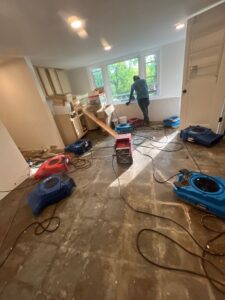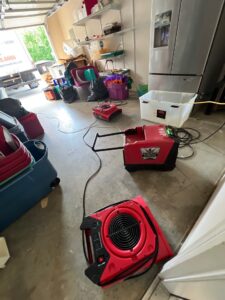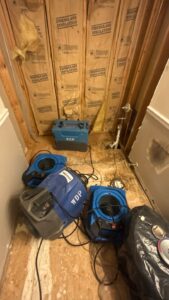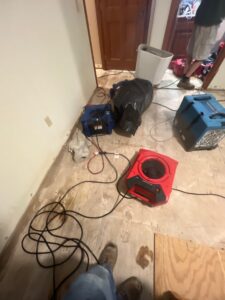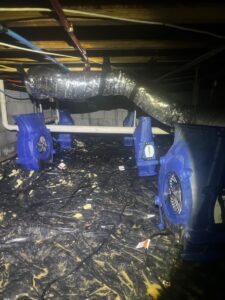
Drying equipment should typically run for 3 to 5 days continuously after water damage, though some situations require up to a week or longer, depending on the materials affected and the severity of moisture intrusion. Turning off equipment too early is one of the most common mistakes homeowners make, and it often leads to hidden moisture pockets that cause structural damage and mold growth months later. The specific timeline depends on factors like humidity levels, the type of building materials involved, and whether water reached wall cavities or subfloor areas.
Why Running Time Matters More Than You Think
Surface-level dryness tricks a lot of people. You touch the carpet, and it feels dry, so you assume the job is done. The problem is that water travels. It wicks up into drywall, soaks into carpet padding, seeps beneath hardwood floors, and saturates insulation inside wall cavities. These hidden areas hold moisture far longer than exposed surfaces.
When drying equipment gets shut off prematurely, that trapped moisture creates the perfect environment for secondary damage. Wood framing starts to warp. Subfloor materials swell and buckle. And within 48 to 72 hours of sustained moisture, mold colonies begin forming in areas you cannot see without removing building materials.
Professional restoration technicians across Nashville and Clarksville use moisture meters and thermal imaging specifically because visible dryness means almost nothing. The goal is to reach dry standard, which means moisture levels that match the normal baseline for your home’s materials.
Factors That Determine How Long Equipment Needs to Run
No two water damage situations are identical. A small kitchen leak that got addressed within an hour requires far less drying time than a basement flood that sat for two days before discovery. Here are the main variables that affect your drying timeline:
- Water category: Clean water from a supply line dries faster and safer than gray water from appliances or black water from sewage backups, which require additional sanitation steps
- Material porosity: Concrete, hardwood, and dense materials absorb moisture deeply and release it slowly compared to drywall or carpet
- Extent of saturation: Surface dampness versus full saturation through multiple material layers changes everything about the drying approach
- Ambient conditions: High outdoor humidity, poor ventilation, and cooler temperatures all slow evaporation rates significantly
- Building construction: Older homes with balloon framing or minimal vapor barriers often have moisture migration issues that newer construction avoids
A technician evaluating your specific situation considers all these factors when setting up equipment and estimating runtime. Guessing based on what you read online rarely accounts for the unique conditions in your home.
Understanding the Equipment Used in Professional Drying
Different equipment serves different purposes during the drying process, and each piece has its own runtime considerations.
Air Movers
These high-velocity fans create airflow across wet surfaces to accelerate evaporation. They need to run continuously because stopping and starting disrupts the consistent airflow pattern needed for effective drying. Most setups require one air mover per 10 to 16 linear feet of wall space in affected rooms.
Dehumidifiers
While air movers push moisture into the air, dehumidifiers pull that moisture out. Without dehumidification, you just move wet air around the room, which can actually spread moisture to previously dry materials. Commercial dehumidifiers used in the restoration work process remove 30 to 80 pints of water per day, sometimes more in severe cases.
Specialty Equipment
Certain situations call for additional tools. Injectable systems force air into wall cavities. Floor mat systems extract water from hardwood without removing the flooring. Heat drying accelerates evaporation in situations where materials can tolerate elevated temperatures. Each of these has different runtime protocols based on the specific application.
The Day by Day Drying Process
Understanding what happens during each phase helps explain why patience matters with drying equipment.
Day 1: Equipment placement and initial moisture readings. Technicians document baseline moisture levels in affected materials and nearby dry areas for comparison. Water extraction happens first if standing water remains. Air movers and dehumidifiers start running immediately after setup.
Days 2 through 3: Moisture readings should show noticeable progress. The rate of moisture reduction tells technicians whether the equipment setup is adequate or needs adjustment. Sometimes additional equipment gets added, or positioning changes based on readings.
Days 3 through 5: Many standard water damage situations reach dry standard within this window. Technicians verify with multiple readings across all affected materials, not just spot checks in a few locations.
Days 5 and beyond: Severe floods, water in wall cavities, saturated concrete, or water that sat for extended periods before discovery often require longer drying times. Rushing this phase invites problems that cost far more to fix than the additional equipment rental.
Signs That Drying Equipment Was Turned Off Too Soon
Sometimes homeowners handle initial water cleanup themselves or work with companies that cut corners on drying time. These warning signs suggest that insufficient drying occurred:
- Musty odors appear weeks or months after the water event
- Bubbling, peeling, or discoloration in paint on walls or ceilings
- Warping or cupping in hardwood floors
- Soft spots in drywall when pressed
- Visible mold growth, especially along baseboards or in corners
- Increased allergy symptoms among household members
- Higher than normal humidity readings inside the home
If you notice these issues after a previous water event, a professional assessment can determine whether residual moisture remains and what remediation steps are needed. The sooner hidden moisture is identified, the less extensive the repairs typically are.
Common Mistakes That Lead to Long Term Damage
Years of seeing how water damage plays out has revealed patterns in what goes wrong. Avoiding these mistakes protects your home and your wallet.
Relying on Feel or Appearance
Touching carpet or walls tells you nothing about moisture levels in padding, subfloor, wall cavities, or insulation. Only moisture meters provide accurate readings, and even then, proper technique matters. A reading taken at the surface differs from a reading taken with probes inserted into the material.
Turning Off Equipment at Night
Drying works through continuous airflow and dehumidification. Stopping equipment overnight because of noise or to save on electricity extends the overall drying time and increases the risk of secondary damage. If noise is an issue, talk to your restoration company about equipment placement options.
Opening Windows Instead of Using Dehumidifiers
This seems logical but usually backfires. Outdoor humidity in Tennessee often runs high, especially during spring and summer. Bringing in humid outdoor air fights against the drying process rather than helping it. Controlled dehumidification always outperforms natural ventilation for water damage situations.
Removing Equipment Once the Surface Feels Dry
Surface moisture evaporates first. Deeper moisture in structural materials takes considerably longer. Equipment removal should only happen after moisture meter readings confirm that all affected materials have reached dry standard throughout their full depth.
When Professional Assessment Becomes Essential
Small spills that get wiped up immediately rarely cause lasting problems. But several situations warrant bringing in professionals who have the equipment and training to dry structures properly:
- Any water event involving more than a few square feet of affected area
- Water that reached carpet, padding, or flooring materials
- Water intrusion inside wall cavities from burst pipes or roof leaks
- Flood water or sewage backups of any size
- Water that sat for more than 24 hours before cleanup began
- Water damage in areas with limited ventilation, like basements or crawl spaces
Restoration companies can provide accurate moisture assessments, appropriate equipment for the situation, and ongoing monitoring to verify that drying progresses properly. This documentation also matters if insurance covers the loss.
What Happens When Moisture Gets Left Behind
Understanding the consequences of incomplete drying helps explain why proper equipment runtime matters so much.
Wood framing and subfloor materials that stay damp begin losing structural integrity. Fasteners rust. Adhesives fail. Over time, floors become bouncy or uneven, and framing members can develop rot that compromises load-bearing capacity.
Mold growth represents another major concern. Once mold establishes in hidden areas, removing it requires exposing the affected materials, treating the mold, and often replacing contaminated building components. A drying job that cost a few hundred dollars in equipment runtime can turn into a remediation project costing thousands if moisture gets left behind.
Insurance complications add another layer. Policies typically cover sudden and accidental water damage but exclude damage resulting from maintenance failures or gradual deterioration. If inadequate drying leads to mold growth or structural damage months later, coverage disputes often follow.
Frequently Asked Questions
Can I use household fans instead of professional air movers?
Household fans move far less air and create lower velocity airflow than commercial air movers. They can supplement professional equipment in mild situations, but cannot replace it for significant water damage. The cubic feet per minute rating on restoration equipment far exceeds that of typical box fans or oscillating fans.
How do I know when everything is actually dry?
Moisture meters provide the only reliable answer. Affected materials need to reach moisture levels that match similar dry materials in unaffected areas of your home. Different materials have different acceptable moisture ranges, so proper interpretation requires some training and experience.
Will running the equipment that long damage my electricity bill?
Commercial dehumidifiers and air movers do use significant electricity, so your power bill will go up while they run, depending on how much equipment is needed. However, this cost is minor compared to remediation expenses if mold develops or structural damage occurs from incomplete drying.
Should I keep running the equipment if there is no visible water left?
Absolutely. Visible water represents only a fraction of the moisture present after water damage. Materials continue releasing absorbed moisture for days after surface water disappears. Equipment runtime decisions should be based on moisture readings, not visual inspection.
What if my restoration company wants to pick up equipment after only two days?
Ask for moisture meter documentation showing that all affected materials have reached the dry standard. Reputable companies take final readings and can show you the numbers. If readings still show elevated moisture, the equipment should stay until proper drying occurs. Two days are rarely sufficient for anything beyond very minor water events.
Protecting Your Home From Lasting Water Damage
Proper drying takes time, and shortcuts during this phase create problems that surface months or even years later. The equipment running in your home after water damage is not just making things uncomfortable temporarily. It is actively preventing structural deterioration, mold colonization, and costly repairs down the road.
If you are dealing with water damage and want certainty that your home gets dried properly, reach out to a qualified restoration professional. Getting the drying strategy right from the start saves significant expense and hassle compared to addressing secondary damage after the fact. Your home deserves a thorough approach, not a rushed one.